Montessori
Growth
Framework™
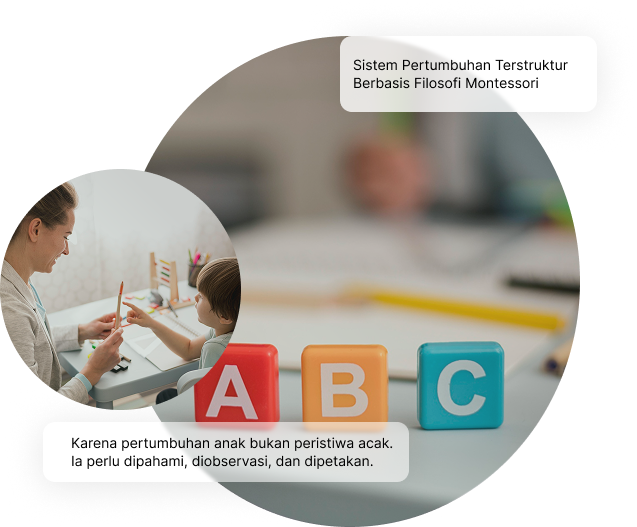
Parahita Montessori Growth Framework™ (PMGF™) is a child development system that integrates Montessori philosophy and educational psychology into a measurable, structured, and developmentally mindful growth pathway.
This framework is built to ensure every learning process and interaction has a clear direction, rather than becoming activities without a map.
PMGF™ stands on
three core foundations
These three foundations ground the entire Parahita environment and program, not as quoted principles but as a system practiced every day.
Observation comes before intervention.
Understanding comes before direction.
Independence
Guided
Independence does not mean leaving children on their own. It is built through structured opportunities.
- Manage themselves
- Make choices within clear limits
- Complete tasks responsibly
Independence is the basis of self-regulation and confidence.
Environment
Structured
Children develop optimally in a consistent and organized environment.
- A neat and organized Prepared Environment
- Clear routines
- Consistent boundaries
Structure creates a sense of safety. Safety makes growth possible.
Respect
for the Child
Every child has a unique developmental rhythm. We honor those differences.
- Manage themselves
- Make choices within clear limits
- Complete tasks responsibly
Observation comes before intervention. Understanding comes before direction.
From the Montessori foundations,
four program pillars grow
These four pillars are the concrete focus of every activity, observation, and intervention at Parahita.
Self-Regulation Foundation
-
Recognize emotions
-
Manage impulses
-
Calm themselves
-
Delay reactive responses
Self-regulation is the foundation of leadership.
Social Intelligence Development
-
Communicate with empathy
-
Cooperate
-
Listen actively
-
Resolve conflict in healthy ways
Social intelligence is built through real experiences, not theory.
Adaptive Resilience Building
-
Face setbacks
-
Try again
-
Adapt to change
-
Build emotional endurance
Adaptive resilience matters more than achievement alone.
Early Leadership Formation
-
Take responsibility
-
Lead by example
-
Respect others
-
Have the courage to make simple decisions
Leadership is the result of stable self-regulation.
PMGF™ Conceptual Structure
This framework ensures every program level has a clear direction and remains connected.
Three Montessori Foundations
Creating Environment & System
Four Growth Pillars
Development Pathway
Mapped development, not guesswork
Every child at Parahita does not merely attend classes. They follow a consciously mapped development pathway.
Development is not measured by academic scores, but by social-emotional maturity and the ability to manage oneself.
01
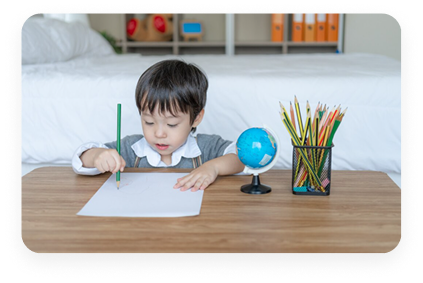
Foundational Independence
A child’s ability to manage their own needs in the classroom and learning environment without constantly relying on facilitators.
02
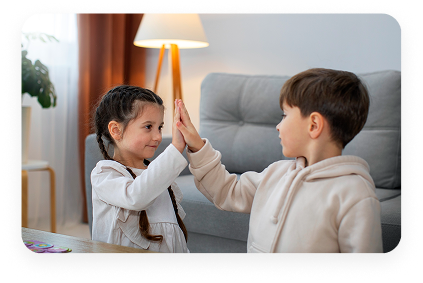
Emotional Regulation
The ability to recognize, express, and calm emotions independently in everyday social situations.
03
Collaboration Skills
The ability to work together, share, listen, and resolve differences in healthy and constructive ways.

04
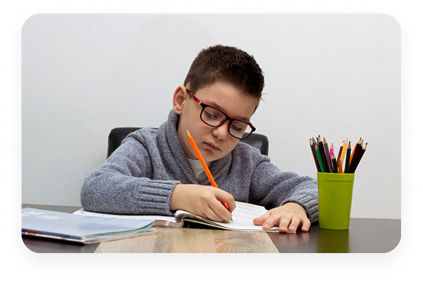
Social Adaptation
The ability to adapt to new situations, routine changes, or interactions with unfamiliar individuals.
05
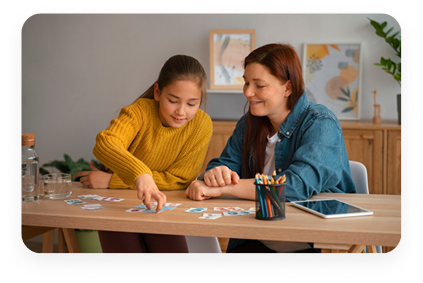
Personal Responsibility
A child’s awareness of their own choices and actions, and the ability to take responsibility for the consequences.
We do not correct immediately. We observe, understand, then guide.
Observation is central to the Montessori approach. At Parahita, observation is not merely watching; it is a deep method of understanding each child as an individual.
- Understand each child’s needs individually
- Identify development areas
- Determine program placement
- Adjust interventions based on real data
Observation makes intervention more precise and less reactive.
Understanding comes before action.
"PMGF™ is designed to ensure children’s growth happens mindfully, systematically, and on a strong philosophical foundation."
Because children who can manage themselves, empathize, and adapt will grow into resilient and responsible individuals.
That is the purpose behind every program level, every observation session, and every pedagogical decision we make at Parahita.